
Finding the right senior living community fit is about so much more than a beautiful lobby, impressive amenities, or a perfectly staged apartment.
Those things are nice. And there is certainly nothing wrong with wanting beautiful surroundings for someone you love.
But after decades of walking through senior living communities, I can tell you this: some of the most important things I notice have nothing to do with what is on the tour brochure.
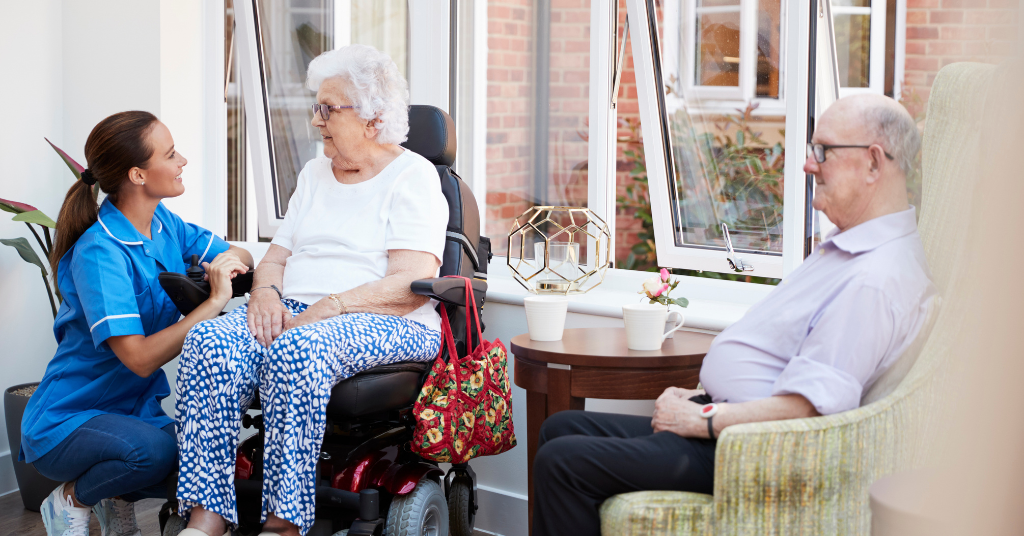
I watch the residents.
I listen to how staff members speak to them.
I notice whether people seem engaged or simply sitting in the same room.
I pay attention to what I hear, what I smell, and how the community feels.
Because when the tour is over and the beautiful lobby is no longer new, that is the environment your loved one will actually be living in every day.
So how do you look beyond appearances and determine whether a community truly feels right?
Senior Living Community Fit Starts With the Residents
One of the first things I notice when I walk into a community is not the décor.
It’s the residents.
Are people out of their apartments?
Are they talking with one another?
Are residents participating in activities — and actually enjoying them?
Do you see laughter and conversation?
Or do you see a room full of people sitting silently in front of a television?
There is an important difference between having residents present at an activity and having residents genuinely engaged.
I also pay attention to the individual senior I’m helping.
Someone who has always been quiet and reserved may not want a packed social calendar. Someone who has spent a lifetime surrounded by people may be miserable in a community where there is very little interaction.
The question isn’t whether the community looks active.
It’s whether your loved one could see themselves belonging there.
Staff Interaction Matters When Choosing a Senior Living Community
This can tell you an extraordinary amount about a community’s culture.
Watch the interactions that aren’t part of your tour.
Does a caregiver passing through the hallway greet residents by name?
Does someone stop for a moment when a resident wants to talk?
Do staff members make eye contact?
Is there warmth in their voices?
Do residents appear comfortable approaching them?
I pay particular attention to the little interactions because they are difficult to stage.
A beautiful building can be designed.
A beautiful culture has to be lived.
And when you’re trying to determine senior living community fit, those everyday interactions matter tremendously.
What to Notice When Evaluating a Senior Living Community
Yes, I notice smells.
Every community can occasionally have an unpleasant odor. This is senior living, and people are receiving personal care. One isolated smell doesn’t tell you that a community is poorly maintained.
But a persistent odor throughout the building is different.
Notice cleanliness too. Look beyond the lobby and into the hallways, common areas, dining room, and other spaces residents use every day.
And listen.
Is the environment peaceful? Energetic? Chaotic? Extremely quiet?
There isn’t necessarily one correct answer.
A lively community with music and conversation might be wonderful for one person and completely overwhelming for another.
Again, we’re looking for fit.
Listen to the Noise — and the Silence
This is something families don’t always think about.
Noise tells you something about daily life.
If you’re considering memory care, for example, some vocalization or activity may simply be part of caring for residents at different stages of dementia. That doesn’t automatically indicate a problem.
Instead, observe how the team responds.
Do they seem calm and attentive?
Does the environment still feel controlled and caring?
On the other hand, don’t automatically assume silence is a positive sign either.
A community can be beautifully quiet because residents are resting — or because very little is happening.
Context matters.
Try to imagine your loved one living within that particular rhythm every day.
Staff Stability Can Affect Senior Living Community Fit
One question I encourage families to ask is:
“How long have your key team members been here?”
Staff turnover is a reality throughout senior care, so I would never judge a community based on one employee leaving.
What I look for is a pattern.
Are the executive director, nursing leadership, activities team, dining staff, and caregivers constantly changing?
Or are there team members who have been part of the community for years?
Long-term employees often know residents deeply — their routines, preferences, personalities, and families.
And that continuity can be incredibly meaningful.
Don’t be afraid to ask about staffing and turnover directly. You aren’t being difficult. You’re trying to understand who will be caring for someone you love.
Meals Can Reveal the Right Senior Living Community Fit
The dining room can tell you far more than the printed menu.
If possible, visit around mealtime or have a meal at the community.
Watch what actually happens.
Does the food look appealing?
Are residents given choices?
Do staff seem rushed, or are they interacting with residents?
Are people sitting alone because they prefer to, or does it appear that no one is helping residents connect?
Does the dining room feel social and welcoming?

Food is an important part of daily life, but mealtime is about more than nutrition. It can be one of the biggest opportunities for social connection throughout the day.
If your loved one has dietary needs, preferences, or is simply a picky eater, ask how the community handles those situations too.
Community Culture Is an Important Part of Senior Living Fit
This may be the hardest thing to put on a checklist, but it is one of the most important things I look for.
Every community has a personality.
Some feel energetic and social.
Some feel peaceful and intimate.
Some are polished and upscale.
Others are simpler but incredibly warm.
None of those descriptions automatically makes one community better than another.
The question is:
Which environment feels most like your loved one?
I have walked into communities that looked spectacular but didn’t feel right for a particular family.
I’ve also walked into communities that weren’t the newest or fanciest option and immediately thought, This is where they belong.
That’s the difference between choosing the most impressive building and choosing the right senior living community fit.
Look Beyond What Was Prepared for Your Visit
During a scheduled visit, naturally, everyone knows you’re coming.
So pay attention to the things that weren’t prepared specifically for you.
Look down the hallway.
Notice a caregiver helping someone.
Watch residents interacting when they don’t realize anyone is observing them.
Listen to how staff members speak to one another.
Notice whether the person leading your visit seems to know residents personally as you walk through the building.
Those unscripted moments often tell you more than anything in the presentation.
The Right Community Isn’t Necessarily the “Best” Community
Families sometimes ask me:
“Which one is the best?”
And my answer is rarely as simple as naming a community.
Because the best community is the one that is best for your loved one.
A community I absolutely love for one family may not be the community I recommend for another.
Care needs matter.
Budget matters.
Location matters.
Personality matters.
Lifestyle matters.
Food matters.
The environment matters.
And sometimes something you can’t quite put into words matters too.
That’s why finding the right senior living community isn’t about checking enough boxes to identify a winner.
It’s about finding the place where all those pieces come together.
Trust What You Notice — Then Ask Questions
If something feels wonderful, ask yourself why.
If something makes you uncomfortable, don’t dismiss that either.
Ask questions.
There may be a perfectly reasonable explanation. And sometimes the answer will give you information you needed before making a decision.
The National Institute on Aging provides information for families considering long-term care and emphasizes looking at a person’s individual needs when evaluating care options.
And if you’re unsure what questions to ask or what you should be noticing, you don’t have to figure that out alone.
If you’d like additional guidance, I’ve created Heartfelt resources and downloadable guides to help families understand their options and feel more prepared for the decisions ahead.
From My Heart to Yours
I know how easy it is to walk into a beautiful community and think, This has to be the one.
But when I’m helping a family, I’m looking beyond what photographs can capture.
I’m thinking about the person you’ve told me about.
Where would Mom feel comfortable sitting with her morning coffee?
Would Dad find someone here who shares his sense of humor?
Would the staff recognize when your loved one was having an unusually difficult day?
Could they belong here — not simply live here?
Finding the right senior living community fit isn’t about finding perfection. It’s about finding a place where your loved one can be known, supported, comfortable, and still very much themselves.
That’s one of the reasons I believe so strongly in seeing communities firsthand and knowing the families I’m helping personally. A list of amenities can tell me what a community offers. It can’t tell me whether that community feels right for your loved one.
That’s the part of this work I never take lightly.
And when you’re ready to begin looking, I’ll be here to walk beside you — helping you look beyond the lobby and find the place that truly feels like home.
— Traci Talley
Heartfelt Senior Solutions