

“Mom, what did you do today?”
She smiled.
“Oh… not much.”
It sounded like an ordinary answer. But then you realized she’d given that same answer for the past several weeks. “Not much.” For many families, senior living alone isn’t the concern at first. It’s the quiet realization that independence has slowly become isolation. Over the years, I’ve sat across the table from many families who didn’t notice one major event that changed everything. Instead, they noticed a series of little changes that quietly added up over time. Looking back, they realized it wasn’t safety that changed first—it was connection.
When Senior Living Alone Doesn’t Feel the Same Anymore
Living alone isn’t necessarily a problem.
Many older adults thrive in their own homes for years. They enjoy familiar surroundings, take pride in caring for their homes, and value the independence they’ve worked hard to maintain.
The concern isn’t simply senior living alone.
The concern is when a once full and meaningful life slowly begins to grow smaller.
If you’ve recently found yourself wondering whether your loved one is beginning to withdraw, you may also find my article “Mom Says She’s Fine… But You Know Something Has Changed” helpful as you learn to recognize the subtle changes families often notice first.
Sometimes the changes are so gradual that even your loved one doesn’t recognize them.
Hidden Signs a Senior Living Alone May Be Isolated
Isolation rarely announces itself.
It quietly slips into everyday life.
The Tuesday morning breakfast with friends quietly stops.
The church pew where she faithfully sat every Sunday is suddenly empty.
The flower beds she lovingly cared for begin to fill with weeds.
The crossword puzzle on the kitchen table hasn’t been touched in days.
The phone rings less often.
The television stays on a little longer.
Meals become simpler.
The days become quieter.
Little by little, a life that was once filled with people, routines, and purpose begins to revolve around the same four walls.
These changes don’t necessarily mean someone needs assisted living.
But they do deserve your attention.
If you’ve also begun noticing changes in memory or thinking, you may find my article “Is It Just Forgetfulness or Something More? Early Signs of Dementia Most Families Often Miss” helpful as you consider what may be contributing to those changes.
Why Connection Matters as Much as Safety
When families think about aging parents, safety usually becomes the first concern.
Are they taking their medications?
Are they eating well?
Have they fallen?
Those questions matter.
But emotional well-being matters just as much.
Research continues to show that loneliness and social isolation can affect an older adult’s overall health, mood, physical well-being, and quality of life. Maintaining meaningful relationships and regular social interaction helps people continue feeling connected, engaged, and purposeful.
The National Institute on Aging offers excellent information about loneliness, social isolation, and healthy aging for older adults and their families.
Sometimes the greatest risk isn’t living alone.
It’s feeling alone.
Helping a Senior Living Alone Stay Connected
The good news is that connection doesn’t always require a major life change.
Sometimes it begins with something wonderfully simple.
A weekly lunch together.
A standing phone call every Sunday evening.
Going back to church together.
Joining a senior center activity.
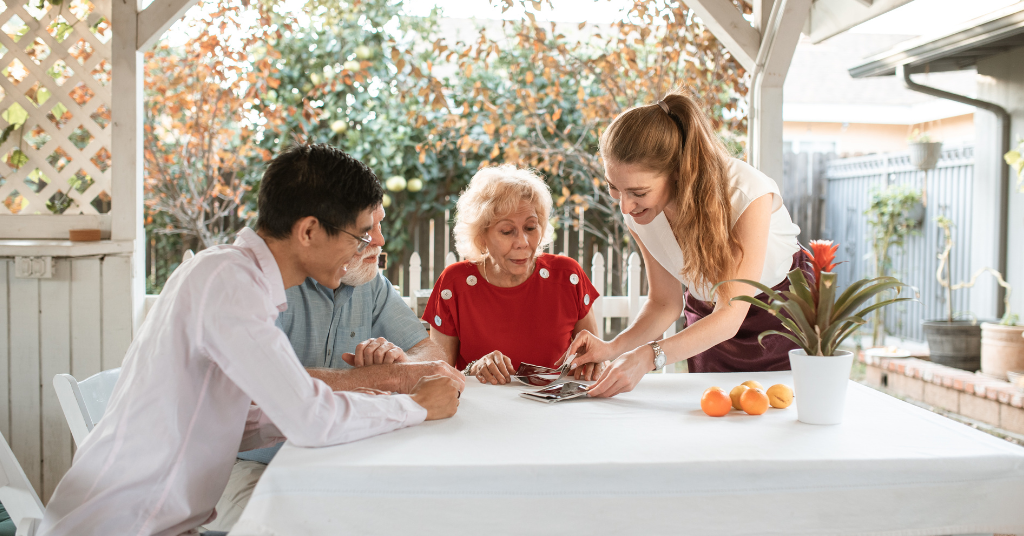
Inviting grandchildren over for dinner.
Taking a walk with a neighbor.
Sharing coffee on the back porch.
Small moments often become the highlight of someone’s entire week.
Families looking for additional caregiving ideas and support can also find valuable resources through the Family Caregiver Alliance.
Sometimes reconnecting with life begins with simply reconnecting with people.
Knowing When More Support May Help
Sometimes increased connection is enough.
Sometimes it isn’t.
There may come a point when isolation is only one piece of a much larger picture.
Meals are skipped.
Appointments are forgotten.
Medications become confusing.
The home isn’t cared for the way it once was.
Bills begin piling up.
Personal hygiene changes.
Those are often signs that additional support may be beneficial.
If you’re beginning to notice these patterns, you may also want to read “When You Start Worrying About a Loved One but Don’t Know What to Do Next.”
For some families, a loved one may continue senior living alone successfully with additional support. For others, it may become the right time to explore additional options that offer both assistance and daily opportunities for social connection.
If you’re beginning to wonder what those options might look like, my article “When Is It Time for Assisted Living?”may help you recognize some of the signs families commonly experience.
The goal isn’t to rush into a decision.
The goal is to begin the conversation while everyone still has choices.

Heartfelt Tip
The next time you visit someone you love, don’t simply ask,
“How are you?”
Instead ask,
“What brought you joy this week?”
That one question may tell you far more than whether they’re physically doing okay.
It offers a glimpse into whether they’re still finding purpose, connection, and enjoyment in everyday life.
A Final Thought
One of the hardest parts of loving an aging parent is realizing that loneliness doesn’t always look lonely.
Sometimes it looks like independence.
Sometimes it sounds like,
“I’m fine.”
Sometimes it quietly hides inside routines that have become smaller and smaller over time.
If you’ve noticed those changes, trust your instincts.
You don’t have to solve everything today.
You don’t have to have every answer.
Sometimes the most meaningful thing you can do is simply show up.
Spend time together.
Listen to the stories you’ve heard a hundred times before.
Notice what has changed.
Start the conversation.
Because while independence is something we all value, connection is what gives life meaning.
And no one should have to feel alone.
If you’re in Cape Coral, Fort Myers, or anywhere in Southwest Florida and you’re concerned about a loved one who is living alone, you don’t have to navigate these decisions alone. Having a conversation early can provide clarity, support, and peace of mind for the whole family.
— Traci Talley
Founder & Senior Living Advisor
Heartfelt Senior Solutions






One Response