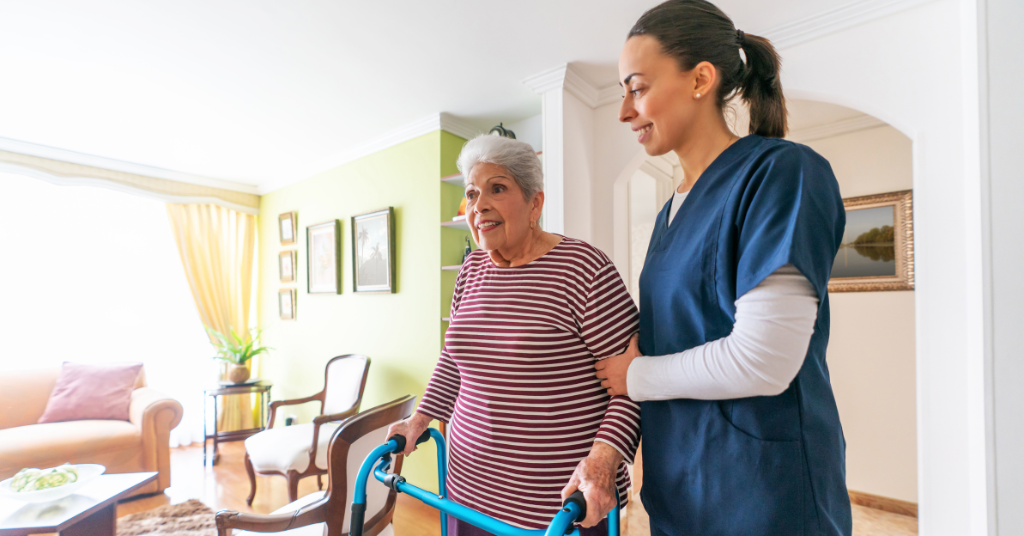

Caregiver holiday survival can feel like an impossible goal when you’re already carrying the daily responsibility of caring for an aging parent or spouse. Add Thanksgiving preparations, Christmas shopping, family gatherings, decorating, travel, traditions, and everyone else’s expectations, and a season that’s supposed to feel joyful can quickly become one more thing you have to manage.
November is National Family Caregivers Month, making this an especially meaningful time to recognize something caregivers don’t hear often enough: you matter in this equation too.
If you’re caring for someone you love this holiday season, you don’t need to create the perfect Thanksgiving, attend every gathering, continue every tradition, or make everyone happy. This year may need to look different, and different doesn’t mean you’ve failed.
Sometimes the best gift you can give your family — and yourself — is permission to make the holidays simpler.
Caregiver Holiday Survival Starts With Letting Go of Perfect
Maybe you’ve always hosted Thanksgiving. Perhaps Christmas Eve has been at your house for twenty years. You’re the one who cooks everyone’s favorite dishes, buys the gifts, decorates the house, and remembers every detail that makes the holidays feel like the holidays.
But caregiving may have changed what you’re realistically able to do.
This may be the year someone else hosts Thanksgiving. Christmas dinner might come from a restaurant. You may put up one tree instead of decorating the entire house. Perhaps you buy gift cards instead of spending days shopping.
Traditions are meaningful because of the people connected to them, not because they were executed perfectly.
Ask yourself: What would happen if I made this easier?
You may discover that your family would rather have a less exhausted version of you than a perfectly decorated holiday.
Decide What Matters Most This Holiday Season
Instead of trying to preserve everything, choose the traditions that genuinely matter to you and your loved one.
Maybe Mom has always loved baking cookies with the grandchildren. Keep that, but let someone else shop for the ingredients and clean the kitchen afterward. Perhaps Dad looks forward to watching the Thanksgiving parade. Sit beside him and watch it instead of spending those hours rushing around preparing food.
Your loved one’s abilities may have changed too. They may not be able to participate in holiday traditions exactly as they once did, but that doesn’t mean they can’t participate at all.
Sometimes adapting a tradition allows you to preserve the part that mattered most in the first place: being together.
Caregiver Holiday Survival Means Asking for Specific Help
People often tell caregivers, “Let me know if you need anything.”
The problem is that an exhausted caregiver may not have the energy to figure out what “anything” should be.
This holiday season, try being specific. Ask your brother to stay with Dad for three hours while you shop. Ask your daughter to handle dessert. Ask your sister to take Mom to her hair appointment. Ask someone else to pick up groceries, wrap presents, or coordinate the family gathering.
Instead of saying, “I need more help,” try saying, “Could you stay with Mom from 1:00 to 4:00 on Saturday?”
Specific requests are easier for people to respond to, and they remove some of the invisible planning burden from you.
Give Yourself Permission to Say No
You don’t have to attend every party, church event, neighborhood gathering, family dinner, or holiday activity simply because you’ve always attended before.
Caregiving already requires an enormous amount of physical and emotional energy. Every additional commitment takes something from the same limited supply.
Before saying yes, ask yourself whether the event will restore you or drain you.
Sometimes getting out of the house and spending time with friends is exactly what you need. Other times, what you need most is an evening at home with absolutely nothing on the calendar.
Both answers are okay.
Protect Your Loved One From Holiday Overstimulation
The holidays can be especially difficult for someone living with dementia or other cognitive changes.
A house full of unfamiliar faces, loud conversations, music, children running around, changed routines, decorations, travel, and late evenings can become overwhelming. Someone who normally functions well during a quiet day may become confused, anxious, agitated, or exhausted during a large gathering.
Consider smaller gatherings, quieter spaces, familiar routines, and shorter visits. If Mom becomes tired at 6:00 every evening, Christmas dinner at 7:30 may not be realistic anymore.
Rather than expecting your loved one to adapt to the holiday, consider adapting the holiday to your loved one.
Holiday Caregiving May Require a Backup Plan
Caregiving doesn’t take a holiday.
Home-care schedules can change. Adult day programs may close. A regular caregiver may take vacation. Medical offices and pharmacies may operate on different schedules.
Before the busiest weeks arrive, look ahead.
Make sure prescriptions won’t run out over a holiday weekend. Confirm caregiver schedules. Know which family member can step in if your usual help isn’t available. If your loved one has medical needs, know whom to contact if something changes when their regular physician’s office is closed.
A little planning now can prevent a frantic phone call later.
Caregiver Holiday Survival Includes Taking Care of Your Body
When caregivers become busy, their own needs often move to the bottom of the list. During the holidays, that tendency can become even stronger.
Try not to survive December on leftover cookies and four hours of sleep.
Eat regular meals. Drink water. Keep your own medical appointments. Take your medications. Get outside. Walk when you can. And protect your sleep as much as your circumstances allow.
You don’t need to begin an elaborate self-care routine. Sometimes caring for yourself looks much more ordinary: eating lunch before 3:00, going to bed instead of wrapping one more present, or sitting outside for fifteen quiet minutes.
Those small things count.
Watch for Signs That You’re Running on Empty
There’s a difference between being tired after a busy week and reaching a point where caregiving is affecting your physical or emotional wellbeing.
Persistent exhaustion, irritability, difficulty concentrating, withdrawing from people you care about, sleep problems, neglecting your own health, or feeling as though you simply cannot keep doing this deserve attention.
The holidays can magnify problems that have already been developing throughout the year.
If you’re recognizing these changes in yourself, don’t dismiss them simply because December is busy. Your body may be telling you that the current care arrangement needs more support.
If you’re wondering whether ordinary exhaustion has become something more serious, I’ve written about the hidden signs of caregiver burnout that families sometimes overlook.
The National Institute on Aging also offers helpful information about caring for yourself as a caregiver, including ways to manage stress and protect your own wellbeing.
Let Other Family Members See the Reality of Caregiving
Holiday visits sometimes bring family members together who haven’t seen Mom or Dad in months.
This can be frustrating for the primary caregiver.
A sibling arrives from out of state, spends two hours with Dad while he’s having a good afternoon, and says, “He seems fine to me.”
Meanwhile, you know what happens at 2:00 in the morning.
Rather than arguing about who understands the situation best, use the time together as an opportunity. Let family members participate in the routine. Allow them to see medication management, mobility assistance, repeated questions, meal preparation, or the amount of supervision your loved one actually requires.
You don’t need to prove how hard you’re working.
But you also don’t need to hide it.
Accept Respite Without Feeling Guilty
Sometimes the most helpful holiday gift someone can give a caregiver is time.
If another family member can safely stay with your loved one, let them.
Go to lunch. Attend a holiday event. Finish your shopping. Take a nap. Sit somewhere quietly and do absolutely nothing.
When family members aren’t available or your loved one needs more assistance, short-term respite stays in assisted living or memory care communities may be another option. These stays can provide care, meals, supervision, and social engagement while giving family caregivers an opportunity to rest.
At Heartfelt Senior Solutions, I help families explore respite care options, identify communities offering short-term stays, and understand what to expect. As with our other placement services, my guidance is provided at no cost to families.
Taking a break doesn’t mean you’ve stopped caring.
It means you’re acknowledging that no one can provide care continuously without rest.
Sometimes the Holidays Reveal That More Help Is Needed
The holidays have a way of bringing things into focus.
Perhaps you’re realizing how difficult it has become to get Mom out of the house. Maybe Dad can’t safely be left alone anymore. Perhaps you’re coordinating so many caregivers that managing the schedule has become a job itself.
Or maybe you’re looking around at your family gathered together and realizing that everyone is worried about the same thing but no one has wanted to say it out loud.
You don’t have to make a senior living decision during Thanksgiving dinner.
But you can begin a conversation.
Sometimes simply saying, “I think we need to talk about how things are going with Mom,” is enough to open a door that has been closed for a long time.
If you’re beginning to question whether your loved one’s needs have outgrown the support available at home, my article on when home care is no longer enough explores the signs that additional help may be needed.
Your Caregiver Holiday Survival Plan Can Be Simple
You don’t need another complicated checklist.
Choose what matters most. Let something go. Ask someone for specific help. Protect your loved one’s routine. Make a backup plan. Take care of your own basic needs. And give yourself permission to enjoy something this holiday season that has nothing to do with caregiving.
Most importantly, don’t measure this year’s holidays against holidays from ten years ago.
Life has changed.
Your family has changed.
Your loved one’s needs may have changed.
Your traditions can change too — and still be beautiful.
If caregiving has become more difficult and you’re beginning to wonder what additional support might look like, my Heartfelt resources and downloadable guide can help you understand senior living and prepare for conversations about what may come next.
From My Heart to Yours
There’s something about the holidays that makes us want everything to be just right.
We want the table to look the way it always has. We want Mom to make her recipe. We want Dad sitting in his usual chair. We want the photographs, the laughter, the traditions, and everyone together.
Sometimes what we’re really wishing for isn’t a perfect holiday.
We’re wishing things hadn’t changed.
If you’re caring for someone you love this year, I hope you’ll be gentle with yourself about that.
Maybe Mom can’t cook Thanksgiving dinner anymore, but she can sit beside you while you make her dressing.
Maybe Dad doesn’t remember every name around the Christmas table, but he still smiles when everyone sings his favorite carol.
Maybe your house isn’t perfectly decorated because you simply didn’t have the energy this year.
None of those things make the holiday less meaningful.
National Family Caregivers Month is a reminder to recognize the millions of people quietly doing what you may be doing right now — helping someone bathe, managing medications, answering the same question again, preparing meals, driving to appointments, losing sleep, and loving someone through a season of life that neither of you expected.
If your caregiver holiday survival plan this year includes doing less, asking for help, or admitting that the current situation is becoming too much to manage alone, that’s okay.
At Heartfelt Senior Solutions, you don’t have to call me because you’ve decided someone needs to move. You can call because you’re tired. Because you’re worried. Because something has changed. Or simply because you’d like to understand what options exist before you ever need them.
Sometimes the best thing we can give the people we love during the holidays isn’t another present.
It’s our presence — and enough support that we still have some of ourselves left to give.
— Traci Talley
Heartfelt Senior Solutions