
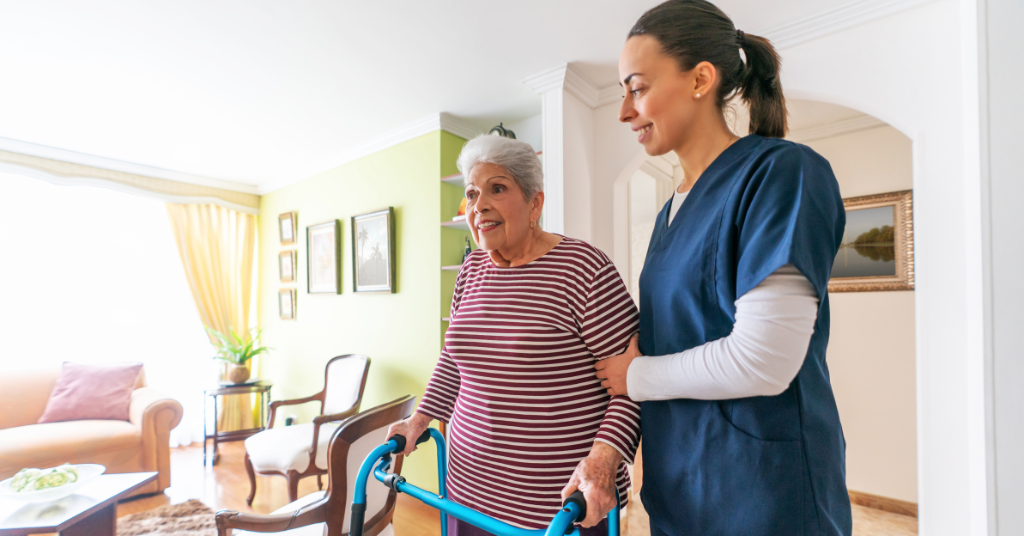
When home care is no longer enough, families don’t always recognize it right away. In-home care may have worked beautifully for months or even years, allowing Mom or Dad to remain in familiar surroundings while receiving help with meals, personal care, medications, transportation, or companionship. But needs change, and sometimes the care arrangement that once worked well gradually stops being enough.
The difficult part is knowing when you’ve reached that point. Is Mom having a bad week, or has something fundamentally changed? Does Dad simply need a few more hours of help, or does he now need a level of support that’s becoming difficult to provide safely at home?
There isn’t one answer that applies to every family. But there are signs that can tell you it’s time to take a closer look at whether the current care plan is still meeting your loved one’s needs.
When Home Care Is No Longer Enough, Look at What Happens Between Visits
A home caregiver may be wonderful during the hours they’re there. The bigger question is what happens during the hours they’re not.
If Mom receives care four hours each morning, what happens from lunchtime until the next morning? Is she safely preparing food? Taking medications correctly? Getting to the bathroom? Moving around the house without falling? Is she alone all evening and overnight?
Families sometimes focus on whether the caregiver is doing a good job rather than whether there are now too many hours when no one is there at all.
Increasing home-care hours may solve the problem. But if your loved one is beginning to need supervision or assistance throughout much of the day and night, it’s worth considering whether home is still the best environment for providing that level of support.
Increasing Falls Can Be a Sign Home Care Is No Longer Enough
One fall doesn’t automatically mean someone can no longer live at home. But repeated falls, near-falls, unexplained bruising, or increasing difficulty with mobility deserve attention.
Perhaps Dad is safe when his caregiver is there but tries to get to the bathroom alone at night. Maybe Mom forgets to use her walker. Perhaps transferring from a bed or chair now requires more assistance than one person can safely provide.
Look at the pattern rather than one isolated incident. If you’re continually adding equipment, increasing supervision, or receiving calls about another fall or near-fall, the home environment may no longer be meeting your loved one’s changing needs.
Home Care May No Longer Be Enough When Nights Become Unsafe
Nighttime can completely change a family’s care needs.
A parent with dementia may begin wandering, becoming confused, or reversing day and night. Someone with mobility problems may need help getting to the bathroom several times. A spouse may be waking repeatedly to provide assistance and becoming dangerously exhausted themselves.
This is particularly important because a care plan that looks manageable on paper during daytime hours may look very different over a full 24-hour period.
If someone needs consistent overnight supervision, families may add overnight home care. But as the number of hours increases, it’s reasonable to compare what that arrangement provides with what a residential care setting could provide.
Medication Problems Can Signal That More Support Is Needed
Medication management is another area where changes can happen gradually. At first, Mom may simply need a pill organizer. Later, someone begins calling to remind her. Eventually, you discover pills left in the organizer, medications taken twice, or prescriptions that weren’t refilled.
Medication errors can become particularly concerning when someone has memory loss or takes multiple medications throughout the day.
If your parent’s medication routine increasingly depends on someone being physically present at specific times, that should become part of the larger conversation about whether home care is no longer enough.
When Personal Care Needs Keep Increasing
Pay attention to changes in bathing, dressing, toileting, continence, eating, and mobility. These are everyday activities that can tell you a great deal about how someone’s needs are progressing.
Perhaps your parent once needed help only with bathing but now needs assistance getting dressed and using the bathroom. Maybe Dad used to walk independently and now needs significant help transferring. Mom may have begun having continence issues that require more frequent attention.
Increasing care needs don’t automatically mean a move is necessary. But they do mean the care plan should be reassessed rather than simply continuing because this is what we’ve always done.
Caregiver Gaps Can Make Home Care No Longer Enough
Even when a family can afford substantial home care, another challenge can emerge: coverage.
What happens when the regular caregiver is sick? What if someone quits unexpectedly? What happens on holidays or weekends? Who fills in when an aide can’t come?
Families may find themselves continually rearranging work schedules or rushing over because there is a gap in coverage.
If your parent’s safety depends on someone being present, reliability becomes just as important as the quality of the caregiver. A care plan isn’t truly sustainable if every staffing change creates a family emergency.
Social Isolation Matters Too
Safety isn’t the only measure of whether living at home is still working.
A parent may be physically safe with a caregiver but spend most of the remaining day alone. Their friends may have moved or passed away. They may no longer drive. Getting to church, activities, restaurants, or social gatherings may have become difficult.
Sometimes families become so focused on keeping Mom at home that they forget to ask whether Mom is still enjoying her life there.
Is she engaged?
Does she have things to look forward to?
Is Dad talking with people besides his caregiver and family members?
Would more social interaction improve his quality of life?
Home can be deeply familiar and comforting. It can also become very lonely.
When Home Care Is No Longer Enough for the Family Caregiver
Sometimes the biggest warning sign isn’t what is happening to the person receiving care. It’s what is happening to the family.
Home care doesn’t always eliminate family caregiving. Adult children may still coordinate schedules, manage prescriptions, handle finances, attend appointments, shop for groceries, respond to emergencies, and cover every gap.
A spouse may still be providing care during all the hours when paid help isn’t there.
If everyone is exhausted despite having home care in place, ask whether the current arrangement is actually providing enough support.
The question isn’t only, “Is Mom receiving care?”
It’s also, “Is this care plan sustainable for everyone involved?”

Compare the Full Cost When Home Care Needs Keep Increasing
Families sometimes assume remaining at home will always cost less than senior living. That isn’t necessarily true, particularly when someone begins needing many hours of paid care each day.
When comparing options, look at the complete picture. Consider home-care hours along with housing expenses, utilities, food, transportation, home maintenance, housekeeping, and any modifications or equipment needed to keep the home safe.
Then compare that with what would actually be included in a senior living community.
This isn’t about deciding that one option is always less expensive. It isn’t. The answer depends on the individual’s needs, the amount and type of care required, local costs, and the senior living option being considered.
The goal is to compare the real cost of both arrangements, not simply the price of a caregiver versus the monthly rate of a community.
More Home Care May Still Be the Right Answer
I want to emphasize this because I never want families to think that increasing needs automatically mean senior living.
Sometimes the answer is simply more support at home.
Perhaps adding evening hours solves the problem. Maybe home modifications make the environment safer. A medication-management system, meal service, adult day program, or additional family involvement may allow your loved one to remain at home successfully.
The National Institute on Aging provides information about services that can help older adults continue living at home, including personal care, transportation, meals, and other forms of support.
The question isn’t whether home care is “good” and senior living is “bad,” or the other way around.
It’s whether the care arrangement still matches the person’s needs.
When Home Care Is No Longer Enough, Learn About Senior Living Before a Crisis
You don’t have to wait until Mom falls again, Dad’s caregiver quits, or someone ends up in the hospital before learning what other options exist.
You can explore senior living while home care is still working.
In fact, that’s often the better time to do it.
You can learn the difference between independent living, assisted living, and memory care. You can understand costs. You can visit communities without an emergency hanging over you. Most importantly, your parent may have a much greater opportunity to participate in the decision.
Learning doesn’t obligate anyone to move.
It simply gives your family options if circumstances change.
What Senior Living Can Provide That Home Care Cannot
One of the biggest differences is that senior living isn’t simply about receiving assistance with personal care.
In the right community, your loved one may also have meals, activities, transportation, housekeeping, maintenance, social opportunities, and staff available around the clock as part of their daily environment.
For someone who has become isolated at home, that social component can be significant. For a family that has spent months coordinating multiple services, having many needs addressed within one setting can also bring tremendous relief.
Of course, every community is different, and senior living isn’t the right answer for everyone. The decision should always begin with the person — their needs, preferences, finances, personality, and what matters most to them.

How Do You Know if Home Care Is No Longer Enough?
Sometimes there isn’t one dramatic moment.
Instead, there are more calls.
More falls.
More hours of care.
More medication problems.
More nights when someone needs help.
More worry.
More family members saying, “I don’t know how much longer we can keep doing this.”
Pay attention to the accumulation.
If your family is continually adding pieces to make the current arrangement work, it may be time to ask whether you’re still supporting a good care plan — or continually trying to rescue one that no longer fits.
If you’re beginning to wonder whether home care is no longer enough, my Heartfelt resources and downloadable guides can help you understand senior living options and begin learning what another level of support could look like.
From My Heart to Yours
I know how deeply families want to honor a parent’s wish to remain at home.
Home holds memories. Familiarity. Independence. A lifetime of routines and possessions. Wanting to preserve that makes perfect sense.
But sometimes the question slowly changes.
It stops being, “How can we keep Mom at home?” and becomes, “Where can Mom live the safest, happiest, most supported life possible?”
Those aren’t always the same answer.
And recognizing that home care is no longer enough doesn’t mean home care failed. It may have done exactly what your family needed it to do for a very long time. Your loved one’s needs simply changed.
Sometimes additional help at home is the right next step. Sometimes senior living is. And sometimes a family doesn’t know which one is right yet.
That’s where I can help.
At Heartfelt Senior Solutions, I’ll take the time to understand what’s actually happening — what your loved one can still do independently, where they’re struggling, what support is already in place, what the family is carrying, and what matters most to everyone involved.
Then we can look at realistic options together, without assuming that moving is automatically the answer.
Because the goal isn’t to keep someone at home at all costs.
The goal is to help them live well, wherever home happens to be.
— Traci Talley
Heartfelt Senior Solutions