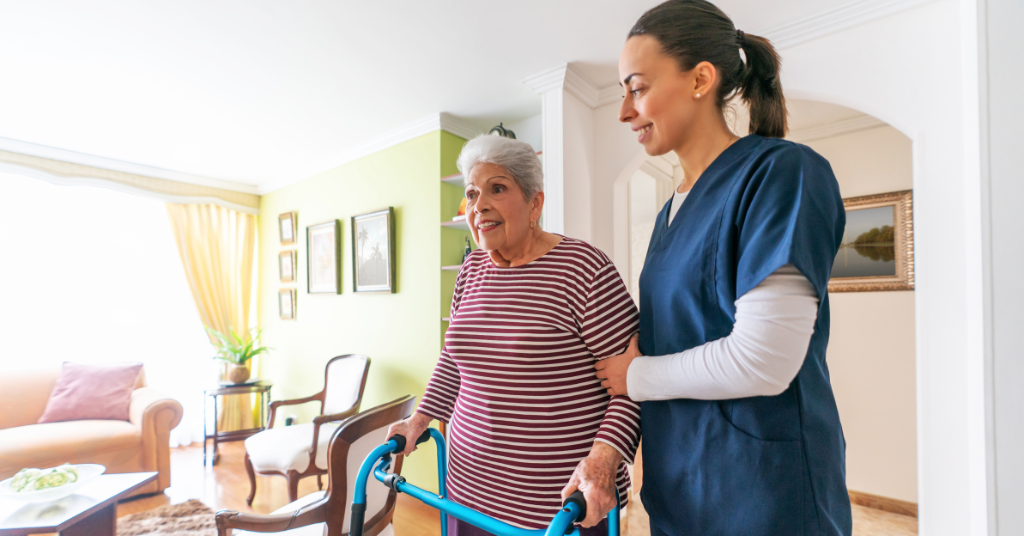

Visiting aging parents Labor Day weekend can bring unexpected realizations, especially if it’s been several months since you’ve spent significant time together.
Maybe you talked to Mom every week all summer.
She sounded fine.
Dad told you everything was good whenever you asked.
But then you arrive for the long weekend, walk through the front door, and something feels different.
Mom seems thinner than you remember.
Dad is moving more slowly.
The refrigerator isn’t as full as it used to be.
There is a stack of unopened mail on the counter.
Or maybe there isn’t one thing you can point to at all. You simply find yourself thinking:
When did this change?
Long-distance conversations can tell us a lot, but they don’t always reveal how an aging parent is actually managing day to day. A Labor Day visit may be the first extended time you’ve spent together since spring or early summer — and sometimes that time together brings changes into focus.
That doesn’t mean you need to panic.
But it may mean you need to pay attention.
Aging Parents at Labor Day: Notice What’s Changed Since Your Last Visit
Rather than looking for everything that could possibly be wrong, think back to the last time you were together.
What’s different?
Maybe Mom used to walk easily from the living room to the kitchen and now reaches for furniture along the way.
Maybe Dad has always been meticulous about his appearance, but this weekend you notice he’s wearing the same clothes repeatedly.
Perhaps the house that was once spotless looks neglected.
Or the parent who always had something planned seems to spend most days sitting at home.
Small changes are sometimes easier to recognize when you haven’t been there every day.
The question isn’t simply, Is Mom okay?
Ask yourself:
Is Mom managing differently than she was the last time I was here?
Look Beyond What Your Aging Parent Tells You
Our parents don’t always tell us everything.
Sometimes they don’t want us to worry.
Sometimes they’re fiercely protective of their independence.
And sometimes they may not recognize how much things have changed.
So while you’re together, quietly observe daily life.
Open the refrigerator when you’re helping prepare lunch. Is there fresh food? Are there expired items? Does it look like your parent is eating regularly?
Notice medications. Are pill bottles scattered around? Are prescriptions being taken correctly?
Look at the mail. Are bills piling up?
Notice the home. Are there new trip hazards? Is basic housekeeping becoming difficult?
Watch your parent getting in and out of a chair, navigating stairs, or walking across the room.
None of these things alone necessarily means your parent can no longer live independently.
You’re simply gathering a more complete picture.
Labor Day Visits Can Reveal Changes in Mobility and Safety
Physical changes can happen gradually enough that the person experiencing them adapts without realizing how much has changed.
You might notice Mom holding onto countertops.
Dad may hesitate before stepping off a curb.
Perhaps there are unexplained bruises, or you hear about a recent “little stumble” that wasn’t mentioned on the phone.
Take those observations seriously without immediately turning them into a confrontation.
You can also look around the home with fresh eyes.
Are pathways clear?
Is your parent struggling with stairs?
Is the bathroom becoming difficult to navigate safely?
Are frequently used items stored where they can be reached easily?

The National Institute on Aging provides helpful information about falls and fall prevention for older adults.
The goal isn’t to frighten your parent. It’s to notice risks before a crisis forces everyone to make decisions quickly.
Aging Parents Labor Day Visits May Reveal Changes in Memory
Repeating a story doesn’t automatically mean dementia.
Neither does occasionally forgetting a name or walking into a room and forgetting why — something most of us have done.
What deserves attention is a change from your parent’s usual behavior.
You might notice:
Repeated questions within a short period of time.
Confusion about familiar routines.
Missed appointments.
Difficulty following a conversation.
Unpaid bills when finances were previously well managed.
Getting lost or confused in familiar places.
Unusual difficulty completing tasks they’ve done for years.
Again, you’re not diagnosing anything during a holiday weekend.
You’re noticing.
If something concerns you, write it down. Specific examples can be helpful later when talking with your parent’s physician.
Pay Attention to Loneliness Too
Sometimes the biggest change isn’t physical at all.
Ask about the summer.
Who has Mom spent time with?
When did Dad last have lunch with a friend?
Are they still attending church, clubs, card games, exercise classes, or other activities they once enjoyed?
Has driving become difficult enough that they’re quietly staying home more often?
A person can be physically capable of living independently and still be struggling with isolation.
The Centers for Disease Control and Prevention provides information about social connectedness and its relationship to health and wellbeing. [Link “Centers for Disease Control and Prevention” to its social connectedness information.]
Families sometimes focus so heavily on whether a parent is safe at home that they forget another important question:
Are they still enjoying their life there?
Changes in Aging Parents Don’t Automatically Mean Senior Living
This is important.
Noticing changes doesn’t mean you should spend Labor Day announcing:
“Mom, it’s time for assisted living.”
Please don’t.
What you’ve noticed may point toward something relatively simple.
Perhaps your parent needs help with housekeeping.
Maybe transportation would help.
Perhaps a medication needs to be reviewed.
Maybe they need more social opportunities, home care, a medical evaluation, or some modifications around the house.
And yes, sometimes the changes suggest that it’s time to begin learning about senior living.
But learning about options is not the same as making a decision.
You don’t need a crisis before you begin gathering information.
Start the Conversation With Curiosity, Not Conclusions
If your Labor Day visit has raised concerns, choose your words carefully.
Instead of:
“You can’t keep living like this.”
Try:
“Mom, I’ve noticed it seems a little harder for you to get around than the last time I was here. How has it been feeling to you?”
Instead of:
“You’re forgetting everything.”
Try:
“Dad, I’ve noticed a couple of things that have me a little concerned. Have you noticed any changes yourself?”
Then listen.
You may learn something you didn’t know.
Your parent may admit they’ve been struggling.
They may become defensive.
They may tell you everything is perfectly fine.
You don’t have to resolve the entire future in one conversation.
Sometimes the first successful conversation simply opens the door for another one.
Aging Parents Labor Day Concerns: What Should You Do Next?
Before you leave and return to your normal routine, take a few minutes to think about what you observed.
Ask yourself:
- What specifically seemed different?
- Was this one isolated incident or a pattern?
- Is there an immediate safety concern?
- Does a medical professional need to be involved?
- Could additional support at home help?
- Do my siblings or other family members need to know what I noticed?
- Would learning about future care or senior living options help us prepare?
If you live far away, consider who sees your parent regularly and could help you understand whether these changes are new.
Most importantly, don’t wait for an emergency simply because you’re afraid that asking questions means you’re committing to something.
It doesn’t.
Let What You Notice Become Information, Not Panic
Labor Day weekend may end with everyone hugging goodbye, loading suitcases into the car, and returning to busy lives.
But if something felt different during the visit, don’t simply convince yourself you imagined it.
Pay attention to that feeling.
You don’t need to make a decision Monday night.
You may simply need to make a phone call Tuesday morning.
Perhaps that’s to your parent’s physician.
Perhaps it’s to a sibling.
Perhaps it’s to someone who can help you understand what senior care options exist.
If you’d like additional guidance, I’ve created Heartfelt resources and downloadable guides to help families understand senior living, recognize changing needs, and prepare before a crisis.From My Heart to Yours
There is something about seeing our parents after time apart that can stop us in our tracks.
In our minds, Mom may still be the woman who managed everything.
Dad may still be the person everyone called when something needed fixing.
And then one weekend, we notice that the people who have always taken care of everyone else may need a little more support themselves.
That realization can hurt.
But noticing doesn’t mean you have to have all the answers.
If your visit with aging parents Labor Day weekend leaves you with questions, start there.
Pay attention.
Have the conversation.
Ask for help when you need it.
And give yourself permission to learn before you’re forced to decide.
I’ve spent many years helping families navigate these very moments — often before they know exactly what they need. Sometimes my role is helping a family find senior living. Sometimes it’s helping them understand that they’re not there yet.
Either way, you deserve honest guidance.
At Heartfelt Senior Solutions, I’ll meet you where you are, listen to what you’re seeing, and help you understand what the next step could look like — without pressure to take one before you’re ready.
Because sometimes caring for an aging parent begins with something as simple as noticing that things aren’t quite the way they were the last time you came home.
— Traci Talley
Heartfelt Senior Solutions